Supergirl (2026)

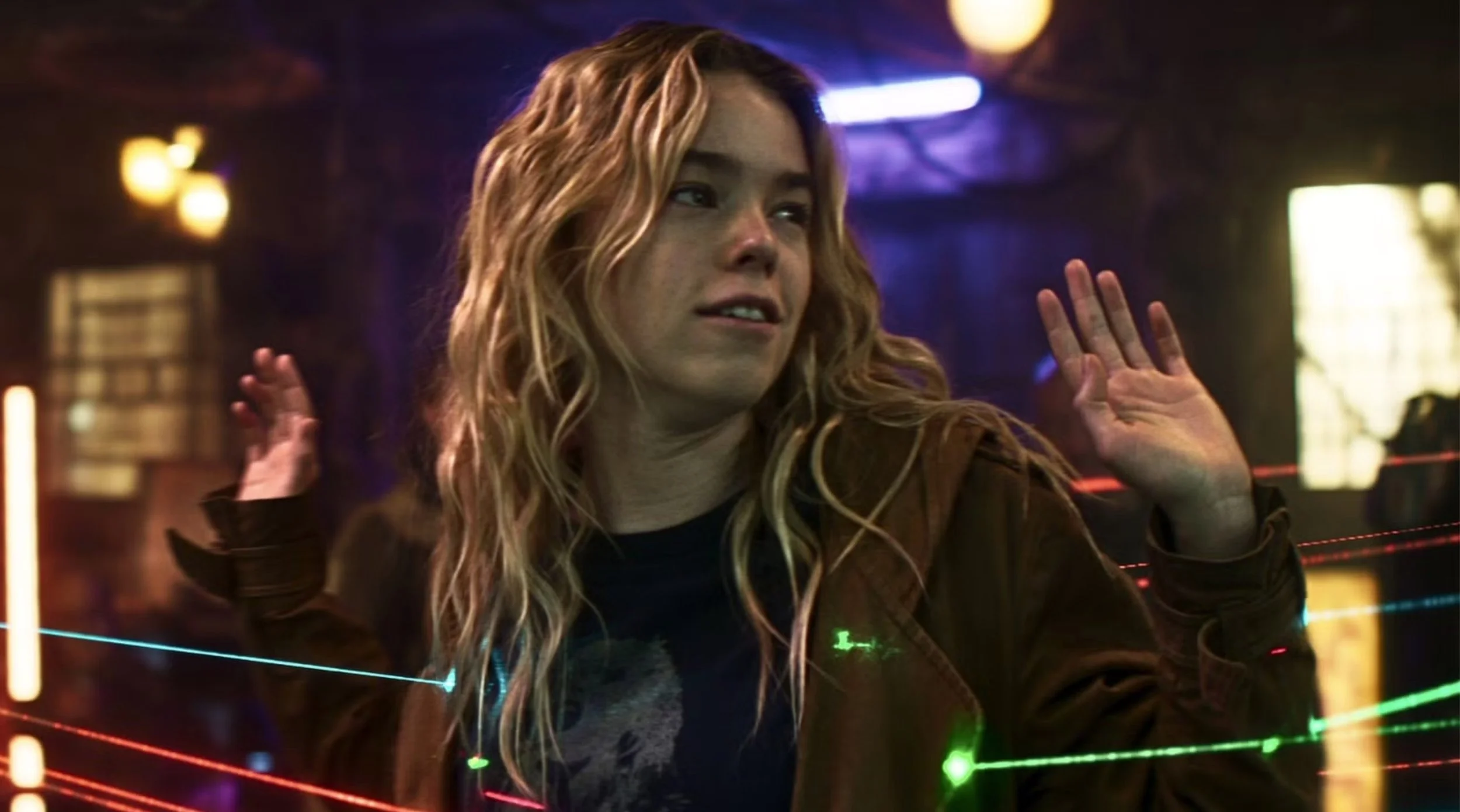
Milly Alcock brings depth and character to make this role her own and to establish this incarnation of Supergirl as more than just a carbon copy of Superman, in a film that thankfully tries to do something different from the usual ‘superhero origin’ plot.

Premise: While on an intergalactic bar crawl to celebrate her 23rd birthday, Kara Zor-El (Milly Alcock) – known as Supergirl on Earth – crosses path with Ruthye (Eve Ridley), another young woman who’s lost her entire family and who’s on a quest for vengeance against Krem of the Yellow Hills (Matthias Schoenaerts) and his band of Brigands.

Review:
I’ll confess that I’ve not been a huge fan of the previous onscreen depictions of Supergirl (although I freely admit she’s been much better served in the comics). While I don’t place any of the blame on Helen Slater, the 1984 big screen version of Supergirl is a pretty terrible movie, and I personally never gelled with the more ‘soapy’ elements of the 2010s Supergirl TV series. I thought that Sasha Calle tried to do something a bit different in 2023’s The Flash, but she was in effect an extended cameo, and so didn’t really get the opportunity to develop the role into a fully fledged character.
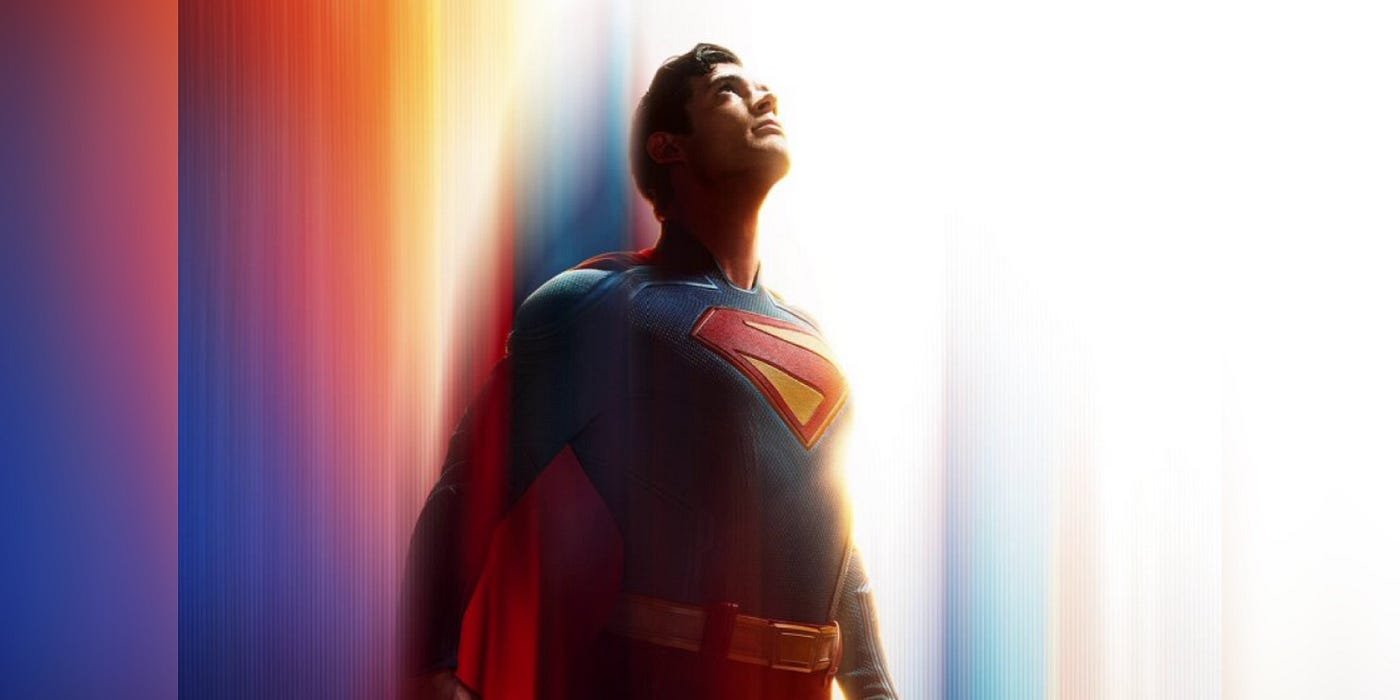
So my expectations weren’t particularly high when it was announced that they would be bringing Supergirl back to the big screen – until two things happened. Firstly, Milly Alcock had that great cameo at the end of last year’s Superman, which instantly established that this Supergirl was going to have a bit more edge than the previous incarnations. And then there was the announcement that this movie version of Supergirl would be based on the critically acclaimed Supergirl: Woman of Tomorrow comic book story.
“…an intergalactic space-western…”
I think that one of the biggest hurdles that a character like Supergirl faces is that she needs to feel like she’s something more than just a female-coded carbon copy of Superman – so when you have her on Earth, wearing glasses as a disguise and battling members of the Luthor family, it’s very difficult for her to establish an identity outside of being ‘diet Superman’. That’s why the decision to set this Supergirl movie almost entirely off-Earth was a stroke of genius.
Aesthetically speaking, making this movie an intergalactic space-western means it feels very different from 2025’s Superman movie. As Kara travels from alien world to alien world, visiting one dive bar after another (all while travelling incognito in civilian clothes), the film feels a million away from the Earth-bound super-heroics of Superman, quickly establishing its own distinct visual identity. We even get to see (in flashbacks) more of Krypton than we did in Superman, which makes sense given that a key plot thread in Superman was that Clark had no first-hand memories of his homeworld, whereas Kara does.
“…Milly Alcock’s by far the best thing in this movie…”
It’s in this emotional respect that Supergirl really distinguishes itself from Superman, far more than on the purely visual level. Superman was about a refugee who was raised in America from a baby, and who only knew about his Kryptonian heritage from second-hand sources (primarily, the damaged recordings provided to him by Jor-El). Supergirl, on the other hand, is a film about coming to terms with first-hand PTSD – without getting into spoilers, but Kara has lived through an awful lot of trauma before the events of this film, and as we learn more of her backstory during the course of the film, we come to understand why she travels to distant worlds to drink and numb the pain, and why she can’t find an emotional connection to Earth in the same way that Clark has been able to. For the first time on screen, in Milly Alcock’s performance I found a Supergirl who genuinely felt like a fully realised, independent character and not just a pale imitation of Superman.
This is unquestionably Milly Alcock’s film, and she’s by far the best thing in it, hiding a multitude of emotional layers under Kara’s brittle exterior. That said, the script makes clever use of David Corenswet’s appearances as Superman, because rather than have him as an active participant in the main plot, he’s there as Kara’s emotional touchstone, whether it’s in flashbacks to her first arrival on Earth, or in the present day when Clark is clearly concerned for his cousin’s emotional wellbeing. In fact, the familial bond between Clark and Kara, and the strains that bond is put under due to their very different upbringings, is one of the most effective parts of this movie.
“…‘True Grit’ in the DCU…”
The central story itself is very much a space-western – from the rural outposts and marauding Brigands, to the quest for vengeances that plays very much as ‘True Grit in the DCU’. Relative newcoming Eve Ridley plays Ruthye, a young girl (in the ‘Mattie Ross’ role from True Grit) seeking help to avenge the murder of her family by Krem of the Yellow Hills, a sadistic pirate, thief and people trafficker played by Matthias Schoenaerts. Kara eventually gets drawn into Ruthye’s quest against her will, when her last remaining connection to her homeworld and her previous life is threatened by Krem – and along the way, their paths also cross that of Lobo (Jason Momoa), an amoral alien bounty hunter pursuing another member of the Brigands gang.
Jason Momoa is great fun as Lobo … but he’s also indicative of Supergirl’s biggest flaw, and that’s at sometimes there are so many moving pieces on the board that Kara herself can get a little lost in the shuffle. The film flip-flops during the course of the movie between Kara having or not having her powers (it depends on what type of sun each alien world is orbiting), and that, combined with having to find ways to weave additional characters like Lobo into sequences, can mean that focus is lost on Supergirl herself at times, even in some pivotal third act scenes.
“…a satisfying & cathartic emotional arc…”
Eventually, however, Kara does get her chance to shine and complete her character’s emotional arc – and it’s that emotional arc that’s arguably more satisfying and cathartic than the overt storyline involving the hunt for Krem. In this one film, I feel that Milly Alcock has provided a more three-dimensional and fully realised version of this character than I’ve seen on screen before, and I look forward to seeing where she goes in the DCU from here.
(Oh, and in case you were wondering, Supergirl doesn’t have any end credit scenes.)