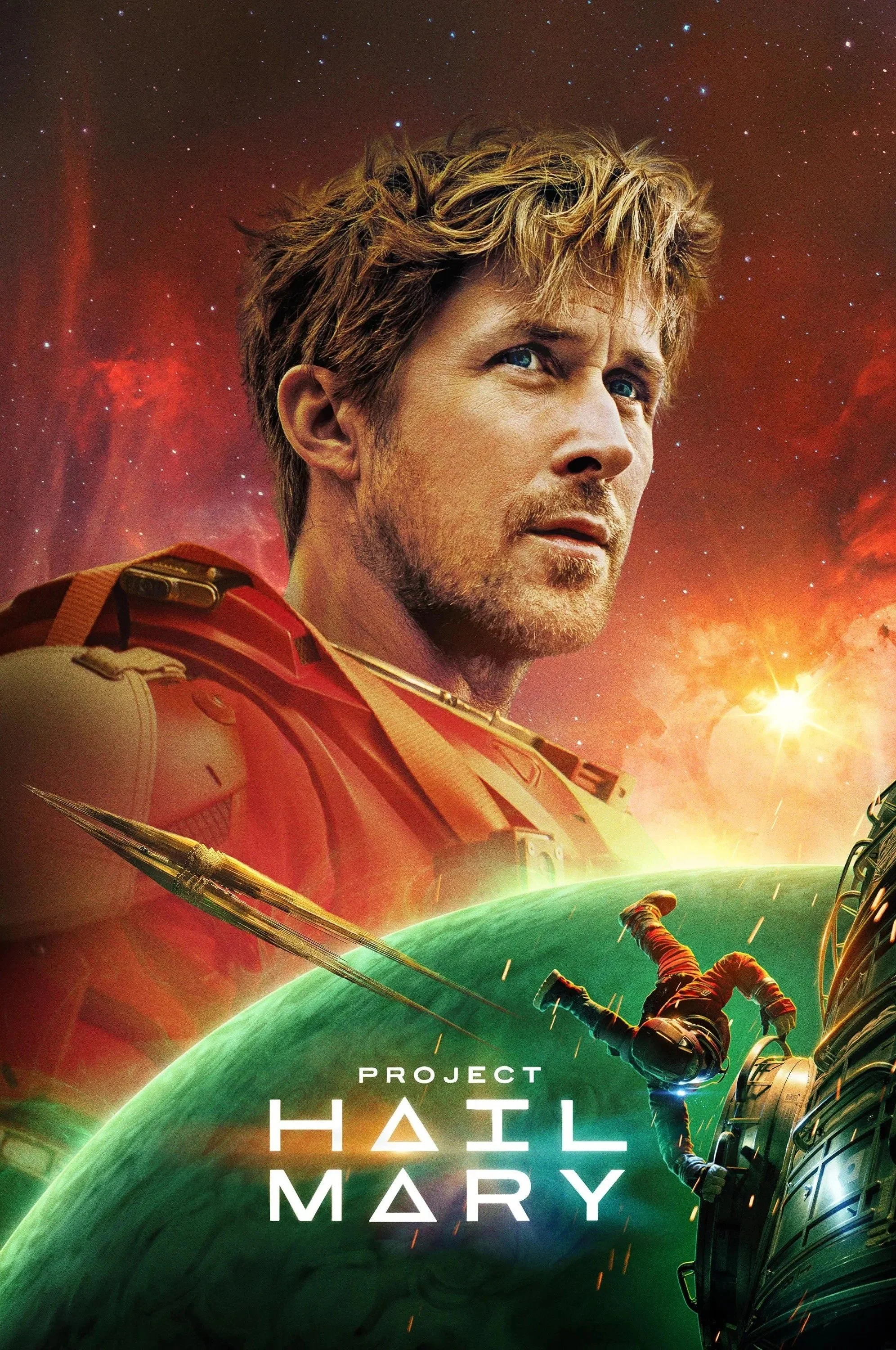
Project Hail Mary
Dramatic and humorous in equal measure, this intelligent, character-driven sci-fi is also emotional, crowd-pleasing and uplifting, managing to entertain both the head and the heart, thanks to the sharp script, deftly balanced tone, and Ryan Gosling’s awards-worthy central performance.

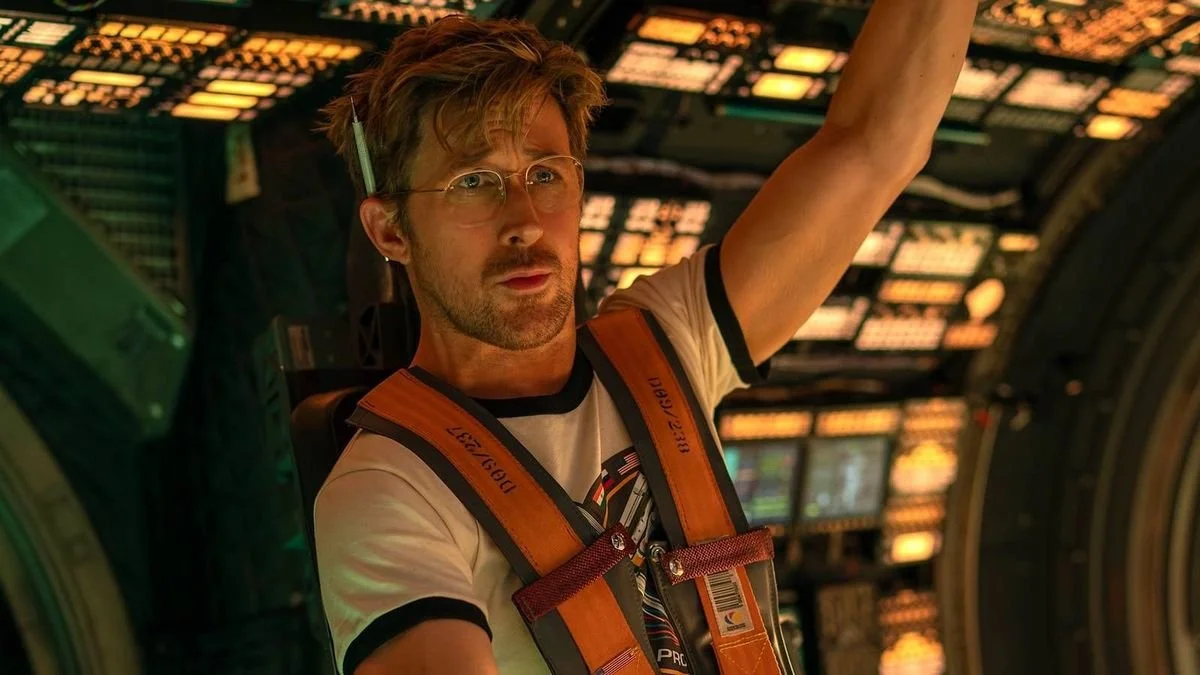
Premise: After waking up from a coma with amnesia, only to find himself alone in an interstellar spacecraft, school-teacher and former molecular biologist Ryland Grace (Ryan Gosling) begins to recall how he’s the last survivor of “Project Hail Mary” – a desperate deep space mission to visit a distant star system in the hope of finding a way to prevent the dimming of our Sun, which threatens to wipe out half of the human race within the next 30 years.

Review:
I was a huge fan of Ridley Scott’s 2015 adaptation of Andy Weir‘s novel, The Martian, and the way it told its story of clever, capable people being clever and capable in a crisis. Even more so today than in 2015, the idea that if the world was in crisis, clever and capable people would put aside their petty differences and solve problems with brains not bombs is a comforting thought (or a comforting fantasy, depending on how cynical you’re feeling about the current state of the world).
Like The Martian, Project Hail Mary is also based on a novel by Andy Weir, and it’s once again been adapted into a smart and pacy screenplay by Drew Goddard, who has displayed a real talent for being able to adapt Andy Weir’s “hard sci-fi" concepts and introspective writing style (where the main characters spend most of the novels on their own) into something truly cinematic. Like The Martian, Project Hail Mary is also set in the near future, making it a sci-fi story that feels uncomfortably realistic and grounded in places, with not a transporter beam or ray gun in sight.
“…Ryan Gosling’s performance is phenomenal…”
The film unfolds in dual timeframes, with the audience first following Ryland Grace (Ryan Gosling) as he awakens on the “Hail Mary” spacecraft with no memory of how he got there, and then getting to see the events leading up to the mission through a series of flashbacks as Grace’s memory begins to return in fragments. This is effective not only in terms of maintaining the dramatic tension about the threat to Earth which led to Grace’s mission, but also in terms of sustaining the pace of the film, so that we’re put right into the chaos and tension of Grace’s deep space mission (rather than having the first half of the movie detail the events back on Earth that led up to it).
Ryan Gosling’s performance is phenomenal in Project Hail Mary, and although this is the type of film/genre often overlooked in the awards season, his performance here is unquestionably awards-worthy. Ryan Gosling’s character is alone for the majority of the film, and yet his performance ensures that the audience is always engaged and invested in events from Grace’s perspective. Ryan Gosling does it all in this role – from delivering scientific exposition in a natural and accessible way, to delivering humorous dialogue without undercutting the tension too much, to delivering some truly emotionally raw moments. After having given us some hugely entertaining comedic performances in the likes of Barbie and The Fall Guy this is a reminder of just how good he can be in emotionally complex roles (like in the fantastic, if underrated, Blade Runner 2049).
“…Sandra Hüller is great in her role…”
Although the film has a large cast of supporting characters, most only appear fleetingly, and the only other human character that really gets a chance to make a lasting impression is Sandra Hüller as Eva Stratt, the complicated head of “Project Hail Mary”. Stratt is a wonderfully multifaceted character – at once both representing an inspiring international spirit of cooperation in a time of global peril, while also the cold logic of someone who understands the cost of failing in this mission. Sandra Hüller is great in the role, and a scene in the middle of the film, when she momentarily lets down her emotional walls to share a moment with her colleagues, hits as hard as it does because of how well she maintains her emotional distance at all other times.
Up until this point in the review, I’ve shied away from mentioning a major part of this movie, and that’s because I think some people could consider it to be a spoiler (given that it doesn’t happen until a good way into the film). On the other hand, this plot development has been featured heavily in nearly all of the marketing for the movie ... but if you really don’t want to know a potential spoiler, look away now.
“…the film balances its tone masterfully…”
The truth is, although the film starts out as a hard sci-fi mystery thriller about Grace’s mission to investigate a distant star system, at the end of the first act the film becomes something else entirely – a mis-matched buddy movie. As you may have seen from the movie’s trailers, shortly after arriving at the distant star system, Grace encounters another spaceship, crewed by an alien who’s also there to investigate the unknown phenomenon that may prevent the cooling of its own sun. The alien – who Grace names “Rocky” due to its rock-like appearance – is also the sole survivor of its crew, and what unfolds during the course of the second act is a cross between E.T. the Extra-Terrestrial and Arrival as Grace attempts to find a way to communicate with, and understand, the alien lifeform.
The film balances its tone masterfully, never letting “Rocky” become a cutesy sidekick in the way that some other films have done, while also still making it a very entertaining and humorous character in its own right. Much of the comedy comes from “Rocky’s” lack of understanding of human concepts and references, but ultimately, it’s a space-exploring engineer that’s every bit Grace’s equal partner (if not better) in their mutual goal to save their worlds.
“…a message of hope that centres on science, reasoning & compassion…”
Rocky is brough to life by a team led by lead puppeteer James Ortiz, who also provides the character’s voice – he apparently read “Rocky’s” lines on set for Ryan Gosling in the expectation that he’d be dubbed over by a famous actor, but then the filmmakers decided to keep his vocal performance in the final cut of the film. The fact that “Rocky” was performed on set by a team of puppeteers with a physical puppet (albeit, of course, then augmented by VFX) also adds to the tangibility of that character, and the physicality of the movie.
The relationship that develops between Grace and “Rocky” is the real heart of the movie, and ultimately, is arguably more central to what the film is actually about than the quest to save the Sun. Exploring themes like what it means to be human, individuals’ moral responsibilities to society and the world, and the quest to find purpose and happiness in life, the film has a very humanist message of hope that centres on science, reasoning and compassion (qualities that sadly feel in short supply in today’s society).
“…the first ‘must see’ film of 2026…”
Balancing the shifting tones in this movie was no easy thing, but co-directors Phil Lord and Christopher Miller were more than up to the task (in their first return to the directors’ chairs since 2014’s 22 Jump Street). Grace’s dry sense of humour runs throughout the film and keeps the movie amusing and entertaining, but never at the expense of either the tension or the emotion – and Ryan Gosling, Phil Lord and Chris Miller all deserve a lot of credit for walking this tonal tightrope so carefully and effectively.
Combining an inventive premise (the central story about the cause of the dimming of our Sun was something I’d not seen done before), a polished script and a hugely entertaining central performance from Ryan Gosling, Project Hail Mary really is the complete package. It’s suitable for the whole family without being too childish or cutesy, and it’s a sci-fi mystery adventure that should appeal to those who normally profess not to like sci-fi mystery adventures. Arguably the first “must see” film of 2026.