Whalefall
This adaptation of the 2023 ‘unfilmable’ novel is unlike anything you’ve seen before – part gnarly survival thriller, part emotional drama about the relationships between parents and their children. Austin Abrams gives (another) amazing performance and largely carries the film on his back (again), while Josh Brolin’s supporting role provides the emotional heft, and Brian Duffield’s direction cranks up the claustrophobic tension.

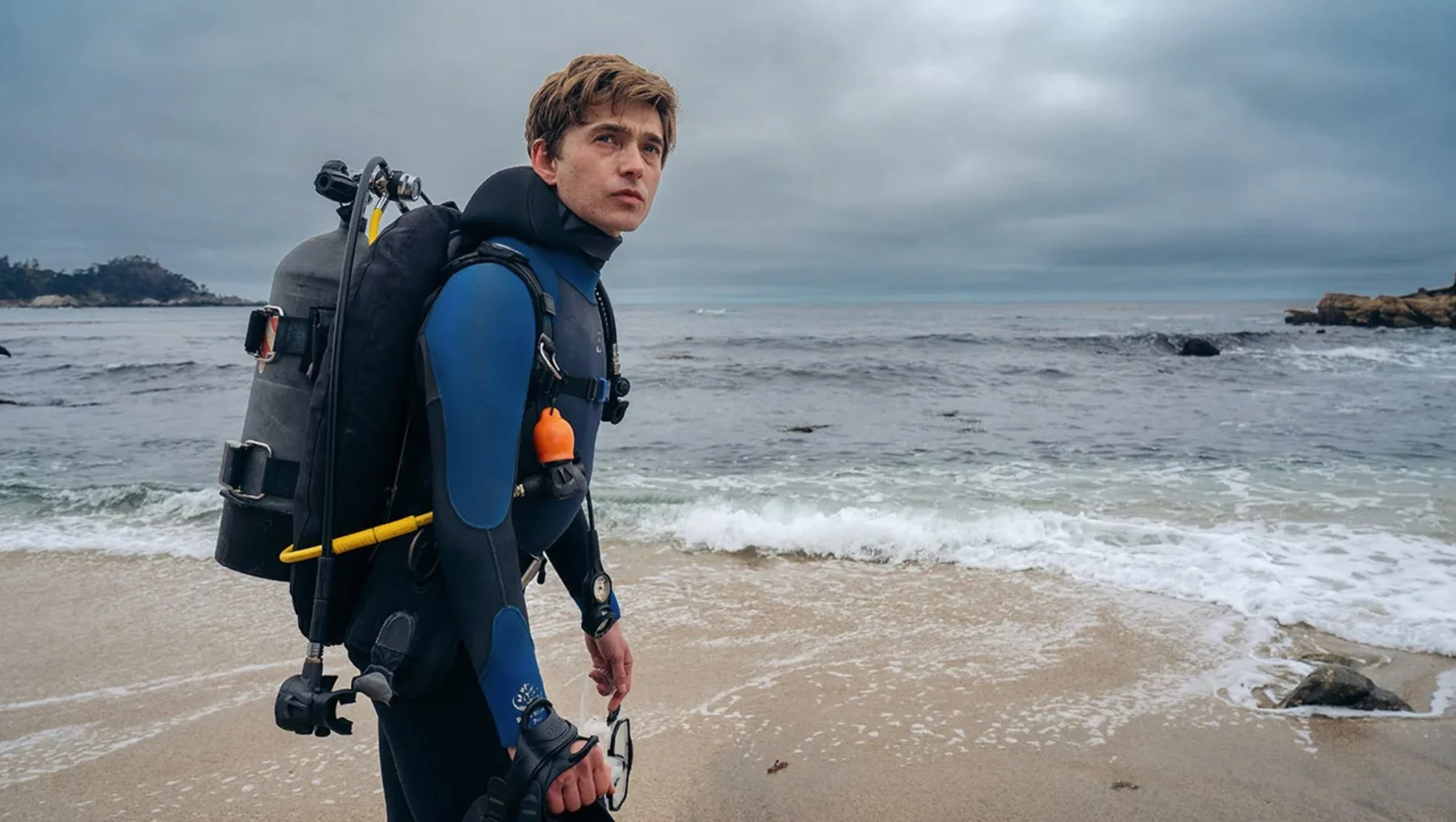
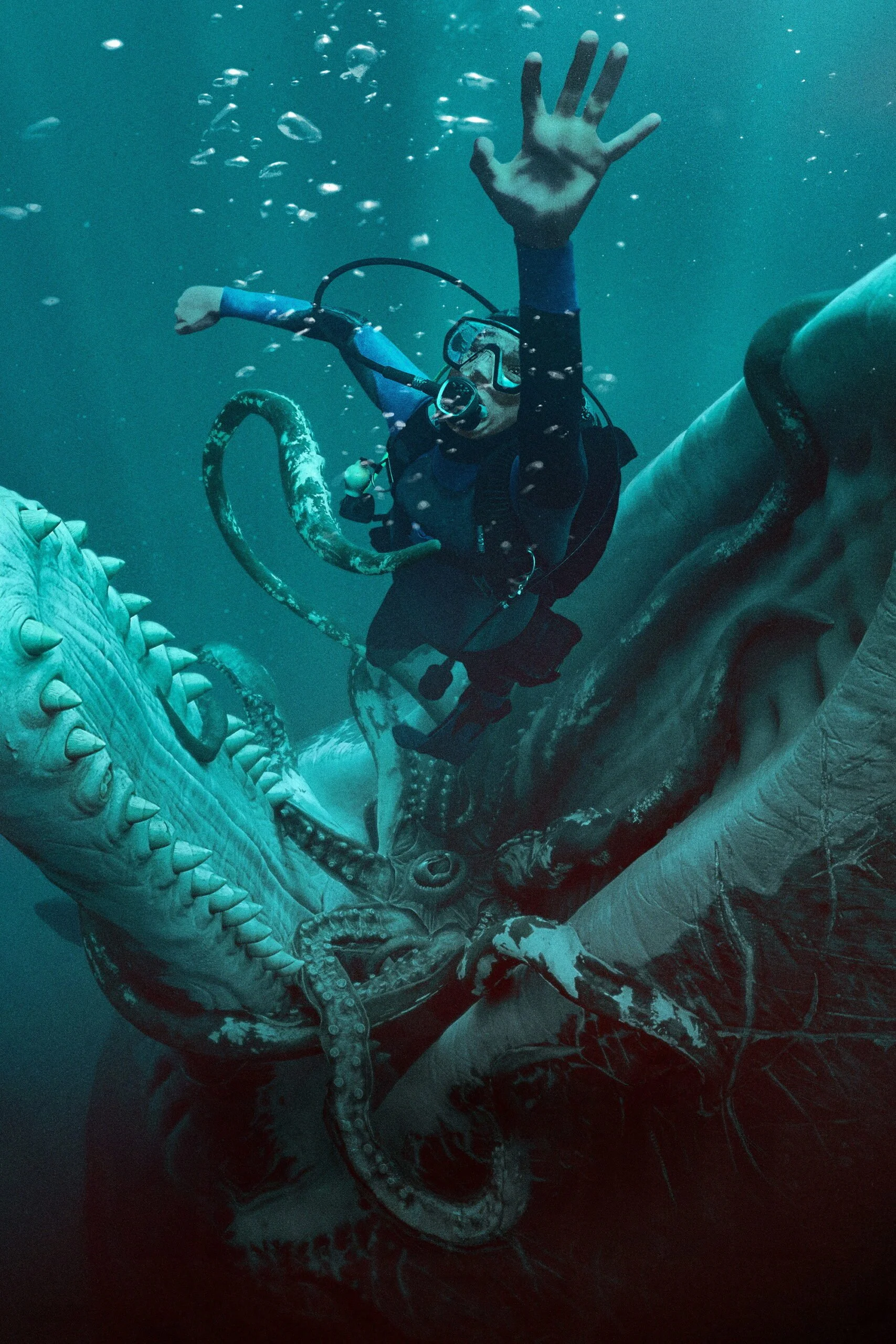
Premise: Still struggling to come to terms with the death by suicide of his estranged father, Mit (Josh Brolin), college student Jay Gardiner (Austin Abrams) returns to his hometown and embarks on a solo scuba dive to try to locate his father’s remains. But while diving, he is caught in a battle between a giant squid and a sperm whale, which results in him and the squid being swallowed alive by the whale, with less than a hour of oxygen remaining in his tank…

Review:
Director Brian Duffield’s last movie was 2023’s impressive No One Will Save You, which was almost entirely dialogue free. But rather than follow that up with an ‘easier’ project, he decided to adapt Daniel Kraus’ novel Whalefall, which had widely been considered to be ‘unfilmable’. However, Brian Duffield and his talented cast and crew have shown that not only was the novel ‘filmable’, but the movie adaptation is one of the most original, inventive and unique films that I’ve seen in a long time.
The movie works on two fronts, each complementing the other brilliantly. On the one hand, the storyline set in the ‘now’ follows Jay Gardiner (Austin Abrams) as he returns to his hometown one year after his father, Mit (Josh Brolin), killed himself following a terminal illness diagnosis. Jay sets out to find his father’s remains, which were never recovered after Mit threw himself off his boat wearing a diving weight-belt, but in the process he is accidentally swallowed by a sperm whale that’s hunting a giant squid.
“…the film had an incredibly tangible & visceral quality…”
Now I don’t pretend to know a lot about sperm whale anatomy, but what I will say is that to a layperson like me, the depiction of what it’s like on the inside of a whale certainly appeared to be more realistic in this movie than, say, Pinocchio. Regardless of how scientifically accurate the depiction is, credit needs to go to the production design team and the sound engineers for constructing physical sets for the whale’s innards, which give the film an incredibly tangible and visceral quality. No doubt certain plot points have been made to ensure the film is accessible and watchable (for example, the whale swallows bioluminescent plankton so that the audiences can see the inside of its stomach, and when the whale dives to the pitch black depths of the ocean, we’re allowed to ‘see’ the whale’s sonar so that we know what’s happening), but none of those concessions take you out of the movie at all.
This survival thriller aspect of the film is not only tense and gripping, but it’s also surprisingly gnarly in places, earning the movie’s 15 certificate. That’s not to say that any of it is excessive or gratuitous, but being trapped in a whale’s stomach was never going to be a pleasant or safe experience…
“…Austin Abrams & Josh Brolin are both terrific…”
But what makes Whalefall so effective (and affecting) is that the survival thriller half of the movie is complemented and enhanced by the more emotionally focused other half, in which Jay experiences a series of flashbacks in which he starts to process and unpack his complicated relationship with his estranged – and often bullying – father. Just as Gravity worked as well as it did because the survival/disaster elements were enhanced by the emotional backstory of Sandra Bullock’s character, in Whalefall the complicated relationship between Jay and Mit is what the film’s really about, and the whole swallowed-by-a-whale element is just the medium through which that relationship is examined. You could sum the whole movie up with two sentences: the opening line from the Philip Larkin poem (“They f**k you up, your mum and dad – they may not mean to, but they do”), and the idea that ‘men would rather get swallowed by a whale than go to therapy’…
All joking aside, Austin Abrams and Josh Brolin are both terrific in this movie, as the flashbacks explore their complicated, damaged relationship, while Jay’s current situation forces him to reassess his perspective on his father as Jay comes face-to-face with his own mortality. There is a lot for Jay to unpack and process – not just Jay’s feelings that he was a disappointment to his father and he was never able to obtain his much sought after approval, but also his feelings of anger, resentment, regret and guilt for the way in which he left their relationship when he went to college, and never saw his father again before he died.
“…you’ve never seen a film quite like this before…”
I’ve heard some people say they thought that the emotional scenes between Jay and Mit lack subtlety – and everyone’s entitled to their opinion, but for me, some of those scenes really hit home, and overall I found the film far more emotionally impactful than I was expecting. The examination of the difficulties that parents and children have communicating with each other rings true and addresses some universal themes, and the film’s emotional moments have stayed with me long after the end credits rolled.
Whalefall is a viewing experience like no other – for me, the intense survival thriller elements kept me on the edge of my seat, while the relationship drama provided the emotional gut punch – and while some people might not feel that all of the film’s wild creative swings entirely work, I can certainly guarantee that you’ve never seen a film quite like this before.