28 Years Later: The Bone Temple
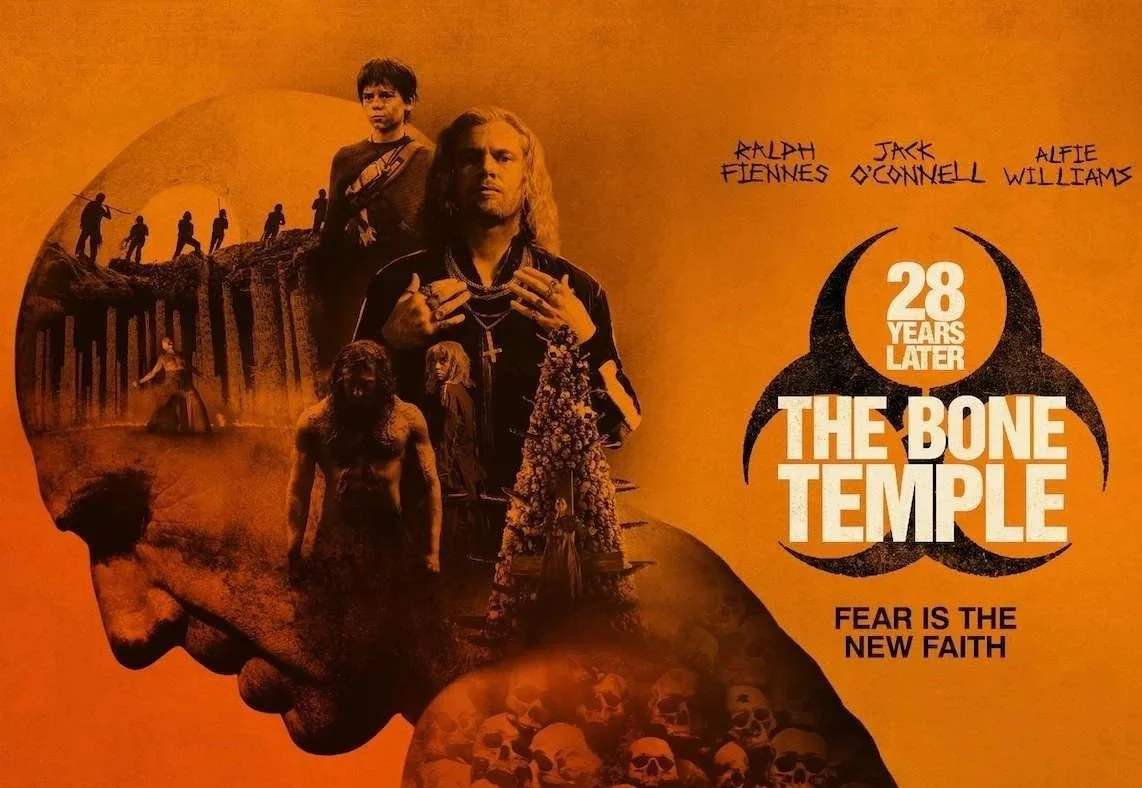
Approaching the subject matter from a different angle, this second instalment in the 28 Years Later trilogy focuses on those trying to hold on to their remaining shreds of humanity, as well as those who have rejected theirs, with Jack O'Connell’s multilayered performance providing one of the most chilling antagonists in post-apocalyptic cinema.

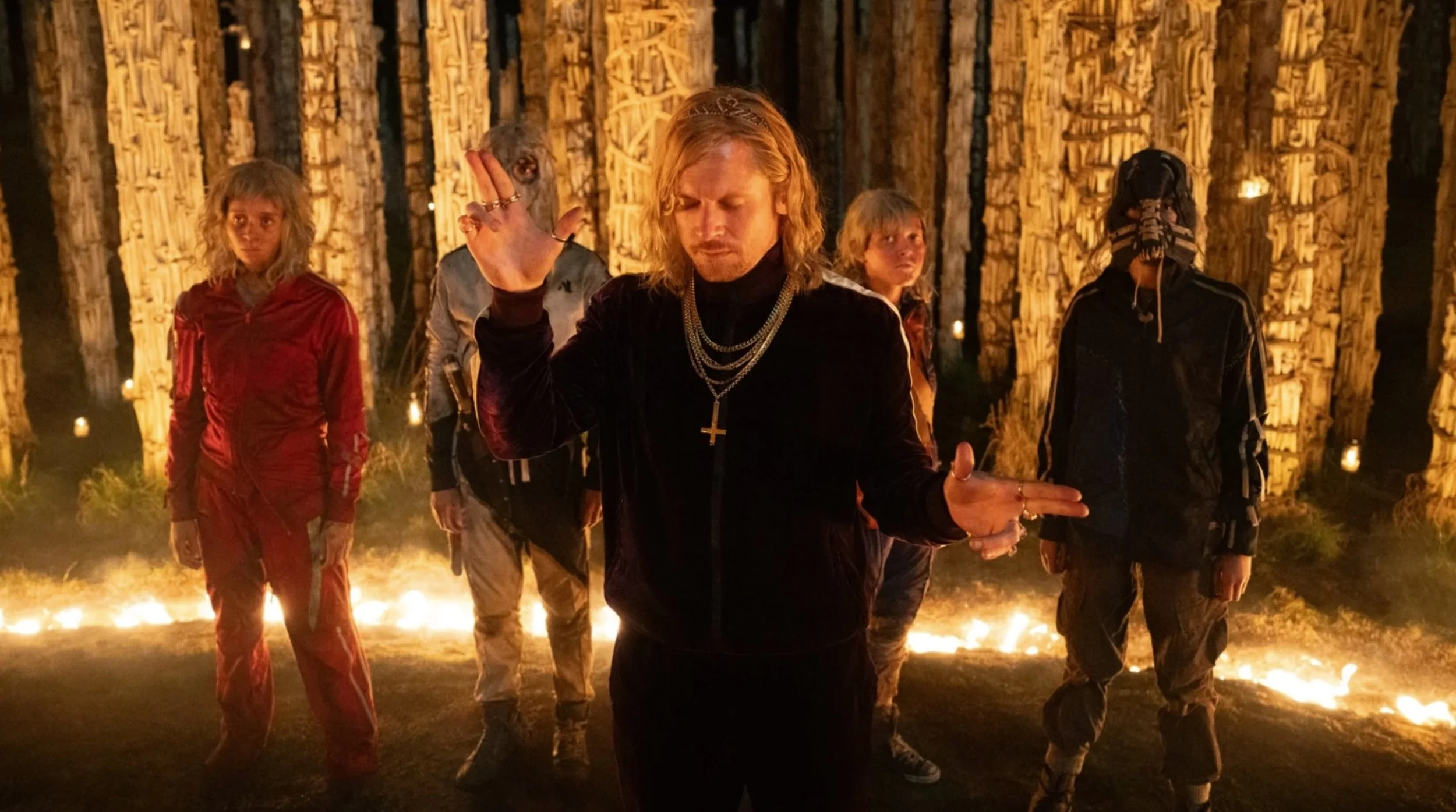
Premise: Picking up immediately after the end of the last film, 12-year-old Spike (Alfie Williams) is forced to join the gang of Satanic zealot “Sir Lord” Jimmy Crystal (Jack O'Connell) as he preys on other human survivors – while Doctor Ian Kelson (Ralph Fiennes) continues to study the behaviour of the infected “Alpha” that he named Samson (Chi Lewis-Parry).

Review:
I had mixed feeling about last years’ 28 Years Later, which I thought started very well (with its horror-focused opening act) and ended brilliantly (with its poignant final act set at the “Bone Temple”), but which lost me in its middle section. I just couldn’t buy into Spike’s decision (spoilers for the first film) to set fire to the island’s limited resources so that he could sneak his mother to the mainland to find a doctor who (as far as he knew) was a homicidal psychopath, especially when Spike had (only a day earlier) repeatedly nearly died on the mainland even when he was protected by his far more experienced father. That “stupid-horror-movie-decision" really took me out of the film in the middle act, and it wasn’t until Spike (Alfie Williams) met up with Dr Ian Kelson (Ralph Fiennes) that the film won me back over.
Ralph Fiennes’ performance was one of the highlights of that first movie, and so the good news here is that he’s the main character in one of the two plot strands in 28 Years Later: The Bone Temple. Following his encounter in the first film with the infected “Alpha” that he dubbed “Samson” (Chi Lewis-Parry ), Dr Kelson crosses paths with Samson again, and begins to develop a better understanding of how the Rage virus is affecting him. I don’t want to say too much about this plot thread, but not only does Ralph Fiennes once again give an incredibly moving performance as a character whose humanity, compassion and empathy shines through in even the darkest times, but relatively newcomer Chi Lewis-Parry also brings Samson to life in unexpected ways.
“…Jack O’Connell plays his second soon-to-be iconic horror villain of the last 12 months…”
The second parallel plot thread follows Spike’s (involuntary) initiation into “the Jimmys” – a Satanic cult led by the sadistic, self-titled “Sir Lord” Jimmy Crystal. Jack O'Connell is truly terrifying as Jimmy Crystal, a man who has lost all sense of morality and humanity, and who represents the very worst that the post-Rage-infected country has produced. This is the second soon-to-be iconic horror villain that Jack O'Connell has played in the last 12 months (after playing Remmick in Sinners), but Jimmy Crystal has none of the charm, charisma or ambition that Remmick had. Whereas you could argue that Remmick was (in his mind, at least) trying to unite the disenfranchised into an undead family, Jimmy Crystal stands for nothing and has no goals other than to inflict pain on others. Jack O’Connell’s performance is surprisingly multilayered, showing that Jimmy Crystal is the hideous product of his environment (he was, in case you forgot, the child who witnesses his family and friends torn apart in front of him in the opening prologue to 28 Years Later), and that at his core he is still a lost child lashing out and looking for some sort of paternal validation – but the filmmakers never let this context for Jimmy Crystal’s behaviour be used as an excuse for any of it.
In that respect, focusing 28 Years Later: The Bone Temple on Jimmy Crystal and Ian Kelson allows audiences to see them as two sides of the same coin – Crystal looked at the horrors of the apocalypse and turned his back on his humanity as a survival mechanism, while Kelson’s conclusion is that there is no point in continuing to exist unless there can be love, compassion and empathy in the world.
“…does not hold back on the violence & gore…”
The audience witnesses the actions of “the Jimmys” gang through the eyes of Spike, but Spike is much more of a passive observer to events in this film (whereas he was effectively the main protagonist in the first film), which also helps to make this sequel feel very different from last year’s first instalment. The member of the gang that we get to know best (after Jimmy Crystal and Spike) is Erin Kellyman‘s “Jimmy Ink”, who seems to straddle the line between being a pragmatist within the gang, and a true believer. Director Nia DaCosta also does not hold back on the violence and gore in a film where the humans are as much of a threat as the Infected, and a couple of scenes more than earn this film its 18 rating.
Overall, The Bone Temple tells a more coherent and consistent story than the first 28 Years Later film (which was big on ambition, but struggled with consistency), which made this a more satisfying viewing experience that was, essentially, a character study hidden within a horror film. Not only does it amp up the gore, but it also has a pitch-black sense of dark humour in places, in particular in a sequence involving a classic Iron Maiden heavy metal song.
“…The Bone Temple is far closer in tone to the original 28 Days Later…”
If you enjoyed 28 Years Later, I think The Bone Temple still has enough inventiveness and ambition to mark it out from the rest of the zombie horror genre, but if you had mixed feelings about 28 Years Later, I think you’ll find that The Bone Temple is far closer in tone to the original 28 Days Later.
And yes, the ending does set up the return of Cillian Murphy as Jim from the original 28 Days Later in the proposed final film in the 28 Years Later trilogy, which will hopefully be coming soon from series director Danny Boyle and series writer Alex Garland – and I, for one, am very interested to see where they take this story next.