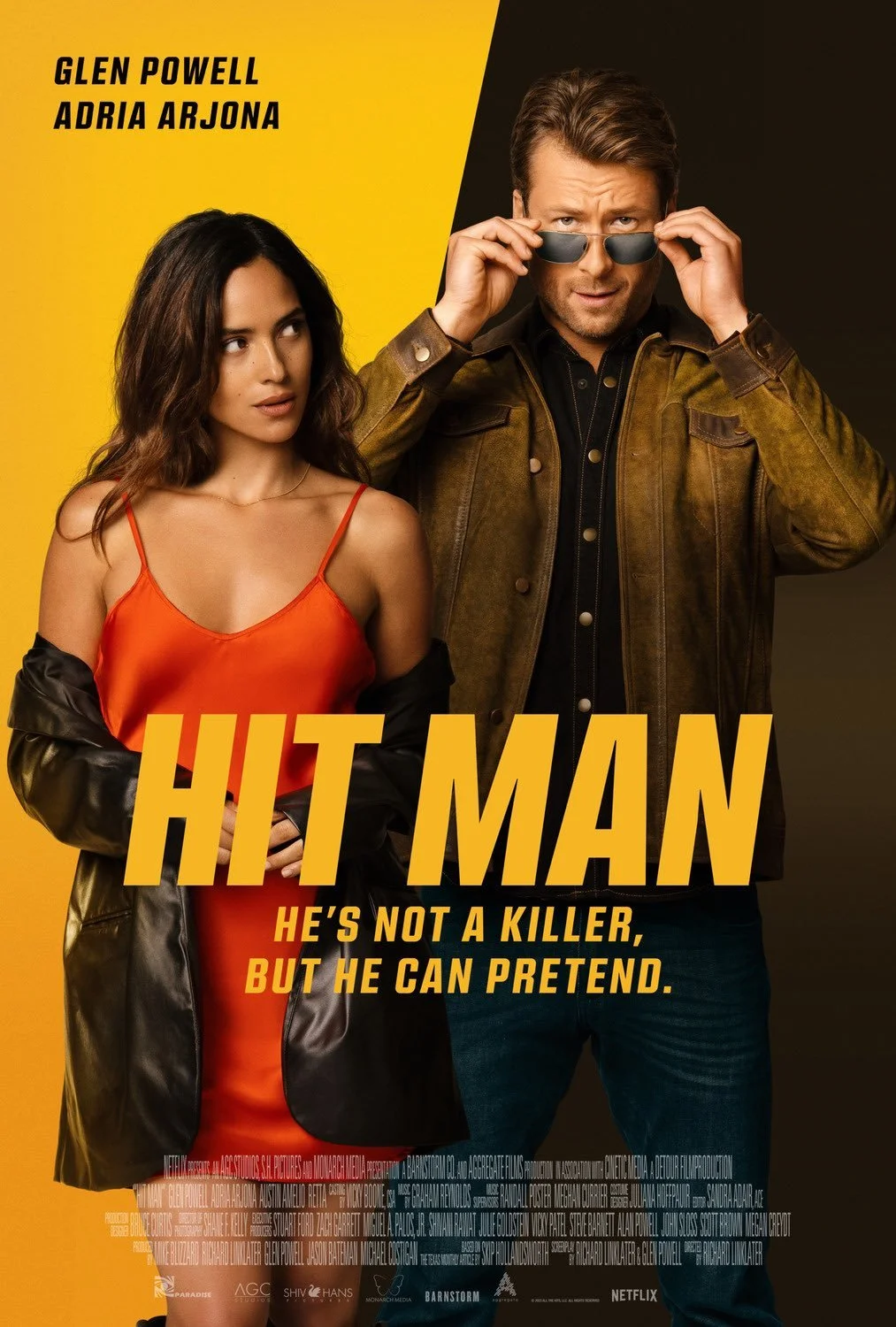
The Running Man (2025)
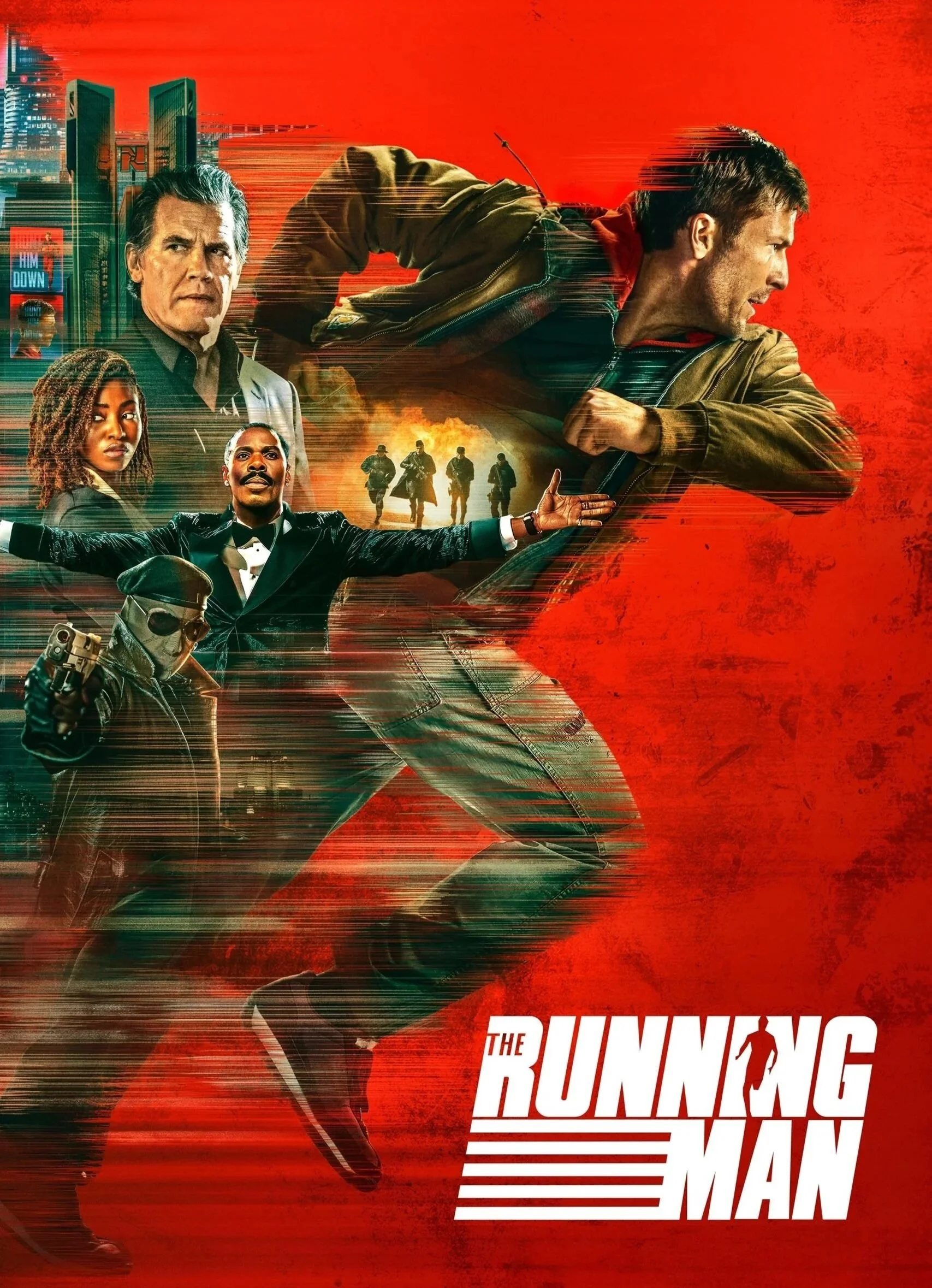
This movie adaptation of Stephen King’s 1982 dystopian novel is more of a darkly satirical thriller than it is an action film, but Glen Powell is engaging as the protagonist who’s struggling against the unfairness of a society ruled by the 1%, and director Edgar Wright delivers some memorable set-pieces while never losing sight of the injustice of the system.

Premise: Set in the near future, the majority of American society lives in poverty, ruled by an authoritarian corporation called the Network, and its “Execs” who live lives of luxury in gated communities. Desperate to get enough money to buy life-saving medicine for his sick daughter, out-of-work Ben Richards (Glen Powell) signs up as a contestant on “The Running Man”, the Network’s most popular reality show, in which contestants have to survive on the run for 30 days, hunted by the general public and the Network’s private hit-squad of assassins.

Review:
The second of 2025’s two big-screen adaptations of Stephen King dystopian thriller novels, The Running Man is far more accessible and entertaining than the earlier The Long Walk. That’s not a criticism of either film – in fact, I think it’s a good thing that they’re both coming at similar themes (the struggles of normal Americans living under an authoritarian regime that attempts to distract the people with macabre forms of entertainment from the failings of the leadership) from very different angles, otherwise it might be a bit much having both films come out within a couple of months of each other. But whereas The Long Walk was a bleak, unflinching and relatively intimate drama focusing on the relationship between a handful of characters, The Running Man is essentially a mainstream Hollywood blockbuster, albeit one with a strong vein of darkly satirical social commentary.
In that respect, I feel that The Running Man has a lot in common with the Paul Verhoeven films of the 80s and 90s – films like RoboCop and Starship Troopers which told really entertaining stories in their own right, but which also had a strong satirical undercurrent. The Running Man could simply be viewed as a near-future sci-fi thriller and is perfectly enjoyable on that surface level … but you really don’t have to scratch deeply to see allegorical and satirical parallels to current events, whether it’s the divide between the privileged “Execs” and the impoverished working classes who can’t even afford healthcare for their children, or the Execs using their control over media and entertainment to demonise and dehumanise certain sections of society for their own gain.
“…the film is carried on the shoulders of Glen Powell…”
But – for better or for worse – co-writer/director Edgar Wright applies a light touch when it comes to the social satire, so it certainly never becomes the focus of the film, nor does it detract from the primary storyline – that of Ben Richards (Glen Powell). Glen Powell is a charisma machine (just look at his performances last year in Hit Man, Twisters and Anyone But You), but in this film he really tones down that side of his persona, because Ben Richards’ primary defining characteristic is anger – his rage against the Network who blacklisted him after he spoke out about dangerous working conditions, and his resentment towards a society that would allow children to die of curable illnesses over something as petty as money. It’s his desperation to save his child that leads him to attempt to win money on a Network-produced show – but it’s Ben Richards’ anger that producer Dan Killian (Josh Brolin) sees and exploits to manipulate Ben into signing up for “The Running Man”, in the hope of it generating a bump in the show’s ratings.
Glen Powell is great as Ben Richards, and given that the movie is seen almost entirely from his perspective, his character is (understandably) the most developed. Josh Brolin gets just enough screentime to flesh out his character, but Dan Killian is still arguably a representative of the Network as much as he is a three-dimensional character in his own right. The film does have a great supporting cast, but we only really get snapshots of each character due to the limited time that Ben spends with each one: Michael Cera and Daniel Ezra get a bit more screentime than others as part of the underground movement against the Network, as does Emilia Jones as a civilian that gets caught up on the hunt for Richards, but William H. Macy and Jayme Lawson get very little screentime as people from Richards’ life before the gameshow. Lee Pace spends most of the film under a mask as the enigmatic leader of the “Hunters”, the Network’s inhouse kill-team of assassins, while Katy O'Brian and Martin Herlihy appear briefly as Richards’ fellow “runners” – but really, the film is carried on the shoulders of Glen Powell for the most part. That said, Colman Domingo does give a masterclass in doing a lot with a little, as the larger-than-life (but still not just a Network stooge) Bobby T, the host of “The Running Man” show.
“…the plot adheres very closely to the novel…”
This 2025 adaptation of Stephen King’s 1982 dystopian novel is far more faithful to the source material than Schwarzenegger’s 1987 movie of the same name, although that’s not necessarily saying much (given how far Arnie’s movie deviated from the novel). In fact, a couple of the gripes that I had about the pacing and flow in this 2025 movie, I have learned since seeing the film come from the fact that the film’s plot adheres very closely to the plot from the novel, so I can’t really hold those niggles against the movie. So yes, it doesn’t precisely follow the traditional three-act movie structure and feels a little more meandering, but in this age of cookie-cutter movie plots, it was refreshing to see a film do something a little differently (even if it wasn’t always 100% successful).
My only other quibble about Edgar Wright’s movie is that, well, it doesn’t actually feel like an Edgar Wright movie. Edgar Wright is known for bringing real flair and individuality to his movies – just look at how much invention and directorial originality he brought to the familiar crime thriller plot beats in Baby Driver. But here, I understand that he’s deliberately tried not to stamp his directorial authorship over the movie, choosing instead to “disappear” into the source material to make this a “Stephen King film” rather than an “Edgar Wright film”, and while I admire the sentiment, I can’t help but feel that a bit more directorial flair wouldn’t have gone amiss.
“…a thrilling, entertaining & tense ride…”
It’s therefore fair to say that Edgar Wright’s biggest budget film to date is not his best – but that said, the positives far outweigh the negatives, and while The Running Man isn’t likely to become an all-time classic, it’s still a thrilling, entertaining and, in places, tense ride, with a great cast and some topical social satire.